Answer Engine Optimization (AEO)
Key Takeaways
- AEO is the new SEO: Being cited by AI assistants now matters as much as ranking on Google.
- Reputation is a ranking factor: AI prioritises brands with positive sentiment and authoritative citations.
- Original data gets cited: Proprietary research is 30% more likely to be cited by AI.
- Digital PR is the engine of AEO: Authoritative media coverage is the source of truth AI models learn from.
What Is Answer Engine Optimization (AEO)?
Answer Engine Optimization (AEO) is the practice of structuring content so AI-powered platforms can extract and cite it as a direct answer to user queries — rather than listing it as a ranked link. Where SEO gets you found, AEO gets you quoted.
When someone asks ChatGPT a question, queries Perplexity for research, or triggers Google AI Overviews, they expect one authoritative answer. In this environment, being listed is not enough. You must be chosen.
AEO in One Sentence
AEO makes your content so clear, structured, and authoritative that AI systems choose it as the definitive answer — across ChatGPT, Google AI Overviews, Perplexity, and voice assistants.
Why AEO Matters: The 2026 Numbers
- 69% of Google searches are zero-click — the answer appears before any link is clicked.
- 800M+ users on ChatGPT weekly; ChatGPT referral traffic grew 123% in six months.
- 52% of U.S. adults use LLMs (ChatGPT, Gemini, Claude, Copilot) for information.
- Gartner predicts traditional search volume will drop 25% by 2026.
- 3.2× more likely — pages with FAQPage schema appear in Google AI Overviews.
- Only 12.4% of websites implement any structured data — early movers win.
How Answer Engines Select Content
AI answer engines use two core mechanisms:
Extraction
Used by Featured Snippets, People Also Ask, and voice search. The engine scans pages for a clearly formatted, concise answer to a specific question. Signals that trigger extraction: question as an H2/H3, direct answer in the first sentence (40–60 words), FAQPage or HowTo schema.
Synthesis
Used by ChatGPT, Gemini, Claude, and Perplexity. The model reads content from multiple sources, evaluates credibility, and composes a response. Synthesis rewards factual precision, clear structure, cited sources, and domain authority. Being indexed is table stakes — being cited requires a higher trust bar.
Platform Quick Reference
ChatGPT — ~70% AI search market share; uses Google's index via SerpAPI. Google AI Overviews — pulls from organic index; standard SEO signals apply. Perplexity — favours recent, conversational, well-cited content.
AEO vs. SEO vs. GEO
These are complementary disciplines, not competing ones. SEO is the foundation; AEO adds answer-layer structure; GEO builds AI citation authority.
| Dimension | SEO | AEO | GEO |
|---|---|---|---|
| Goal | Rank a URL | Become the answer | Be cited by AI |
| Success metric | Position, CTR | Snippet wins, voice citations | AI Share of Voice |
| Core signal | Backlinks, keywords | Answer clarity, schema | E-E-A-T, entity authority |
| Surface | Google/Bing SERP | Snippets, PAA, voice | ChatGPT, Perplexity, AI Overviews |
10 AEO Best Practices
1. Answer First
Place a direct answer (40–60 words) in the first sentence after each question heading. Never bury the answer in paragraph three. This is the single highest-impact AEO change you can make.
2. Implement Schema Markup
Use FAQPage, HowTo, and Speakable JSON-LD schema. Pages with FAQPage schema are 3.2× more likely to appear in Google AI Overviews — yet only 12.4% of sites use any structured data.
{
  "@context": "https://schema.org",
  "@type": "FAQPage",
  "mainEntity": [{
    "@type": "Question",
    "name": "What is Answer Engine Optimization?",
    "acceptedAnswer": {
      "@type": "Answer",
      "text": "AEO is the practice of structuring content so AI platforms
              can extract and cite it as a direct answer to user queries."
    }
  }]
}
3. Target Question-Based Queries
Write content around full natural-language questions, not just keywords. Also cover AI "fan-out" sub-queries — the shorter searches AI runs to compose a longer answer. Use People Also Ask, AnswerThePublic, AlsoAsked.com, and your own support logs.
4. Build E-E-A-T Signals
Add author bylines with credentials, cite sources explicitly ("According to Gartner, 2025"), keep content updated, and earn mentions in reputable publications. AI systems weight trust signals heavily when selecting citation sources.
5. Optimise for Voice Search
Voice queries are always full questions; voice assistants return one spoken answer. Write in plain conversational sentences under 75 words, add Speakable schema, and maintain an accurate Google Business Profile for local intent queries.
6. Build Topic Clusters
AI evaluates topical authority — depth across a subject, not single articles. Structure a pillar page linking to five or more cluster pages. Cross-link clusters back to the pillar and to each other.
7. Fix the Technical Foundation
AI crawlers use the same infrastructure as traditional bots. Ensure Core Web Vitals pass, sitemap is submitted, and robots.txt does not block GPTBot, ClaudeBot, or PerplexityBot.
8. Win Featured Snippets & PAA
Match content format to expected answer type: paragraph (40–60 words) for definitions, numbered lists for processes, tables for comparisons. Monitor snippet capture via Google Search Console — high impressions + low CTR = you're in a snippet.
9. Build Off-Site Authority
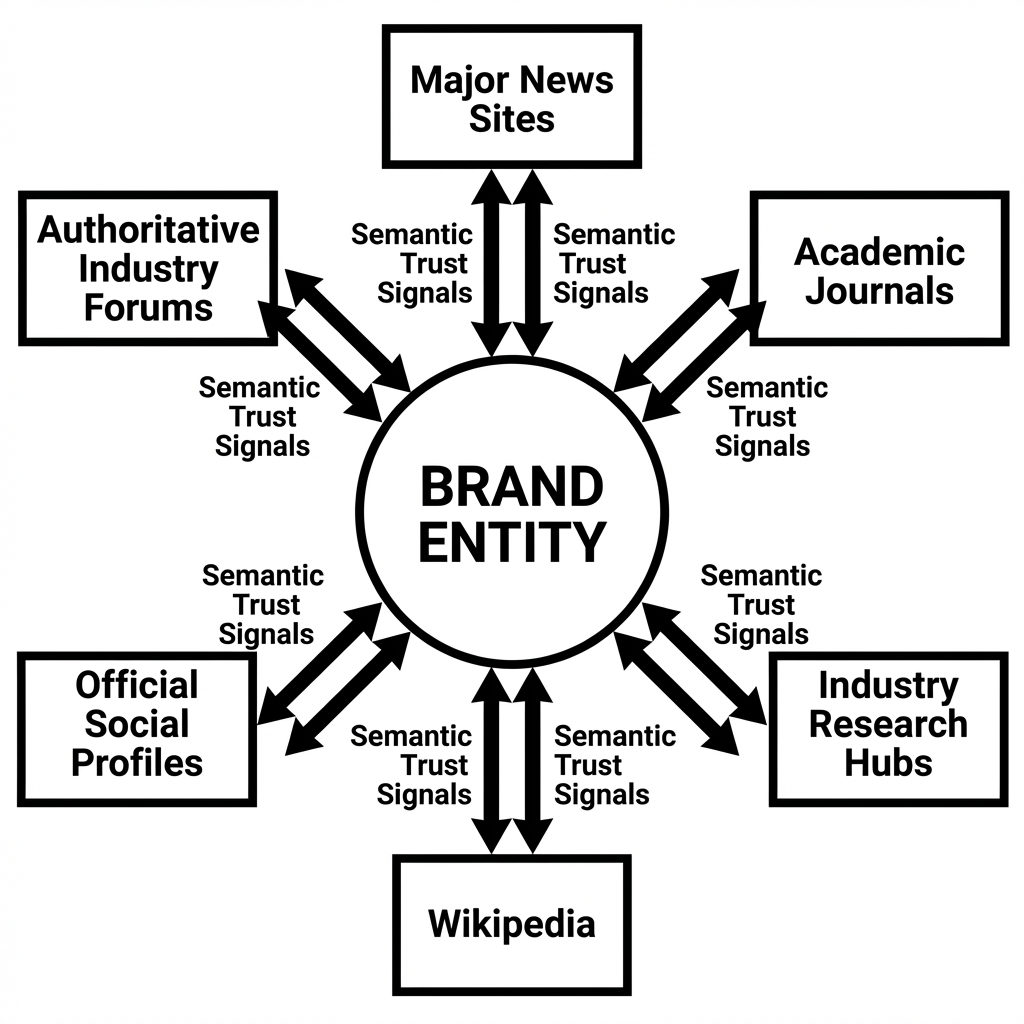
AI evaluates credibility across the whole web. Prioritise Wikipedia entries, analyst report mentions, high-authority press coverage, and Reddit/Quora discussions. Keep brand entity data consistent across Google Business Profile, LinkedIn, Wikidata, and Crunchbase.
10. Measure AI Visibility
Track AI Share of Voice (% of AI answers that cite your brand), Citation Rate, and Featured Snippet Capture Rate. Tools: Profound, Geneo, OmniSEO. Run a 90-day cycle: baseline → implement → measure delta.
Digital PR Is the Engine of AEO
The most powerful AEO lever is not a schema tag — it is earned media in authoritative publications. AI models train on and retrieve from the same sources that define industry credibility: major news, trade publications, research reports, community discussions.
This is why the DPRI Method treats AEO as a core output of Digital PR. Every high-authority placement simultaneously builds SEO backlinks, brand reputation, and AI citation probability.
Practitioner's Tip: The "Information Gain" Score
AI doesn't want the same answer repeated. It looks for Information Gain — new facts not found elsewhere. Before publishing or pitching, ask: Does this contain something AI cannot find anywhere else? If not, rework it until it does.
AEO Implementation Checklist
1: How to setup Foundation for AEO and GEO?
- Submit sitemap to Google Search Console and Bing Webmaster Tools
- Confirm GPTBot, ClaudeBot, PerplexityBot are allowed in
robots.txt - Pass Core Web Vitals on mobile and desktop
- Enforce HTTPS site-wide
2: How to setup Content for AEO?
- Audit top 20 pages — does each answer its question in the first 60 words?
- Add FAQ sections to all product and service pages
- Build topic clusters (1 pillar + 5 cluster pages per topic)
3: How to Implement Schema for AEO?
- Implement FAQPage JSON-LD on all FAQ pages
- Implement HowTo JSON-LD on all process pages
- Add Speakable schema on voice-targeted pages
- Validate with Google's Rich Results Test
4: How to Build Authority for AEO?
- Standardise brand entity across Google Business Profile, Wikipedia, Wikidata, LinkedIn, Crunchbase
- Build digital PR pipeline targeting DA70+ publications
- Add author bylines with credentials to all key articles
5: How to Measure AEO Success?
- Set up AI Share of Voice tracking (Profound, Geneo, or OmniSEO)
- Monitor featured snippet capture in Search Console
- Manually test key queries monthly in ChatGPT, Perplexity, Google AI
- Run 90-day review cycles with documented before/after benchmarks
Frequently Asked Questions
What is Answer Engine Optimization (AEO)?
AEO is the practice of structuring content so AI-powered platforms — ChatGPT, Google AI Overviews, Perplexity — can extract and cite it as a direct answer to user queries, rather than just listing it as a link.
How is AEO different from SEO?
SEO aims to rank a page in search results. AEO aims to become the cited answer inside AI-generated responses. SEO measures clicks and rankings; AEO measures citation rate and AI Share of Voice.
What schema markup is most important for AEO?
FAQPage, HowTo, and Speakable schema are the three highest-impact schema types for AEO. Pages with FAQPage schema are 3.2× more likely to appear in Google AI Overviews.
Why is Digital PR important for AEO?
AI models learn from and retrieve information from authoritative third-party publications. Digital PR earns brand mentions in high-authority sources — the primary off-site signal that determines AI citation probability.
Deep Dive: Study Articles & Case Studies
- What is Answer Engine Optimization (AEO)?
The definitive guide on the shift from search results to direct answers.
- Inside the Algorithm: How Perplexity Cites Sources
How RAG works and why authority is the key citation signal.
- How Brands Are Winning the AI Answer War
Practical examples of companies that restructured content to win AI citations.
Related Articles from Uttik
- How to Win at AEO: The Complete Guide
Full playbook on positioning for AI-driven recommendations.
- Mentions vs. Sources: The Hidden Gap in AI Rankings
Why being cited as a source beats being merely mentioned.
- From Discovery to Authority: How AI Models Decide Which Brands to Trust
The signals AI uses to identify authoritative brands.
- AEO Isn't a Scam — It's the Next Layer of SEO
Data-driven case for AEO as the evolution of search marketing.
- What Modern Marketers Need to Know About AEO
From rankings to relevance — being referenced everywhere that matters.
- A Beginner's Guide to Influencing AI Search
Practical entry point for teams new to AEO.