Chapter 24: Advanced Measurement and Attribution
Key Takeaways
- Focus on outcomes, not outputs: Measure the results of your work (e.g., sales growth), not just the activities (e.g., pitches sent).
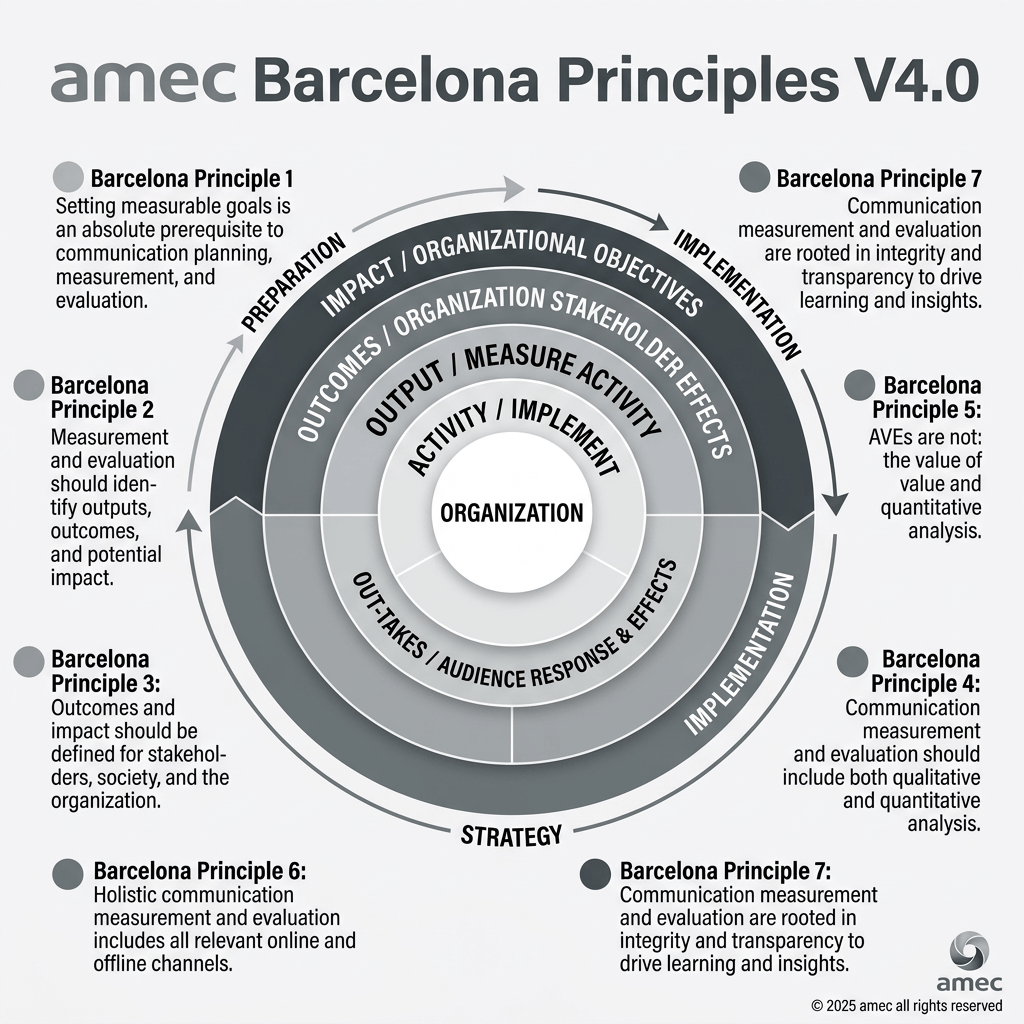
- The Barcelona Principles are your guide: These seven principles are the industry standard for meaningful measurement.
- Attribution is the goal: Connecting PR efforts directly to sales via attribution models is the ultimate way to prove value.
- Directional attribution is achievable: While perfect attribution is impossible, you can track the general path from coverage to conversion.
As Digital PR evolves, measurement becomes more sophisticated. Advanced measurement moves beyond counting mentions to understanding how PR drives long-term business value. This transforms the DPRI Method from a measurement framework into a strategic business asset.
Moving from Outputs to Outcomes
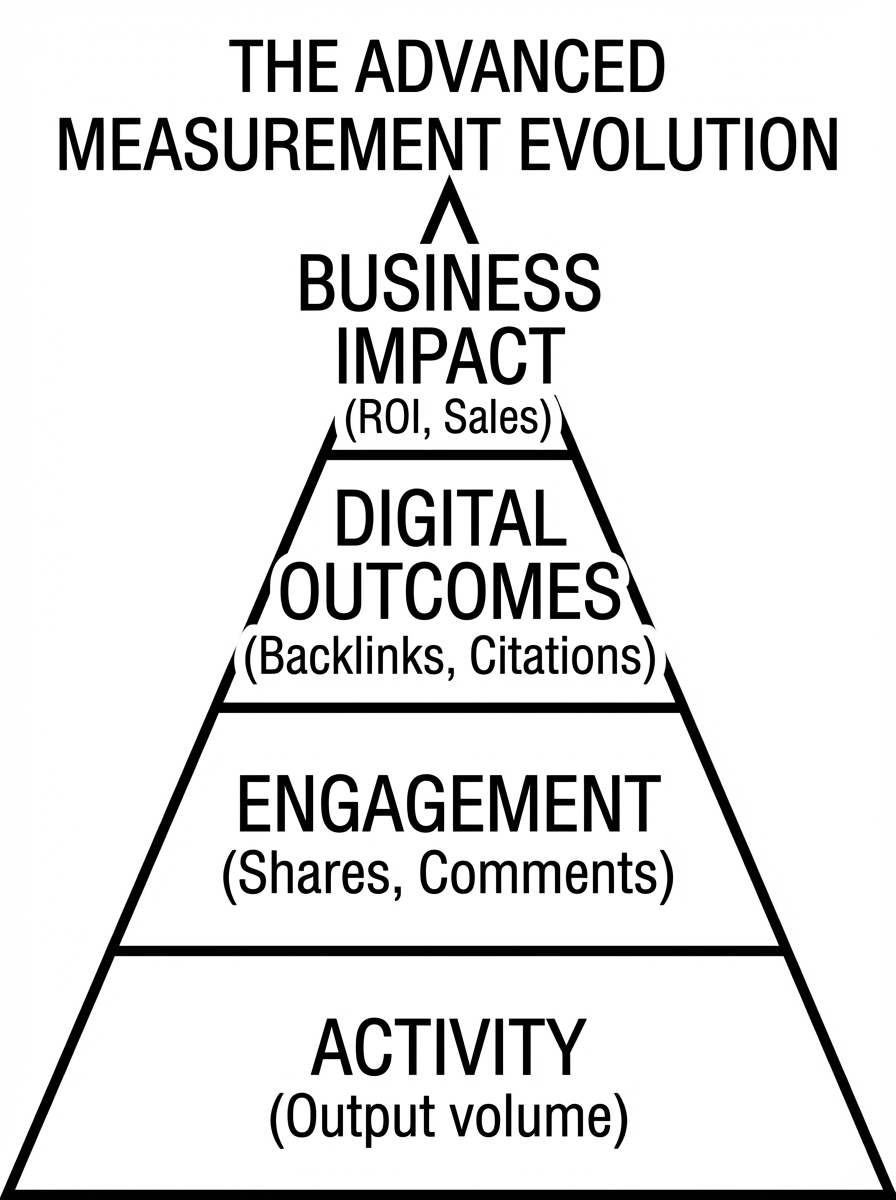
- Outputs are the things you did: the number of press releases sent or social posts published.
- Outcomes are the results: a shift in brand sentiment, an increase in authority, or a rise in revenue.
Advanced measurement focuses on outcomes. It is not enough to secure a media placement; you must show the impact that placement had on the Information Graph.
The Barcelona Principles
The Barcelona Principles are the global standard for communication measurement. They shift the focus from vanity metrics (like AVEs) to tangible business impacts and transparent reporting.
Attribution Models: Connecting PR to Sales
Attribution is the process of identifying which touchpoints led to a sale.
- First-Touch: The first interaction (e.g., a news article) gets 100% of the credit.
- Last-Touch: The final interaction before purchase gets 100% of the credit.
- Multi-Touch: Credit is shared across the entire journey. This is the most accurate model as it acknowledges that PR often builds the initial trust that other channels convert.
Attribution in 2026: The Practical Reality
Perfect attribution is difficult. A customer may read an article about you today and buy three months later after seeing a separate ad. To manage this, use UTM parameters on all links, monitor branded search volume (which spikes when PR works), and simply ask customers how they heard about you.
Chapter 24 Toolkit: Advanced Measurement Concepts
Practical Exercises
Exercise 1: Outcome Mapping
List your last five PR outputs (e.g., sent a press release). For each, trace the chain to a business outcome. Where did you lose visibility in the measurement? Identify one way to close that gap.
Exercise 2: Barcelona Principles Self-Audit
Score your current measurement practices (1-5) against the seven Barcelona Principles. Identify the lowest-scoring principle and define one specific change you can make to align your reporting with that standard.
Digital PR Integration ( DPRI Method )
The transition from outputs to outcomes is the transition from PR as a cost center to PR as a value driver. The DPRI Method ensures that every output is designed with a measurable outcome in mind.
Next: To achieve advanced measurement, you need the right tech stack. Chapter 25 covers the tools and technologies required for modern Digital PR monitoring and analysis.